








TECHNICAL ANALYSIS & PLANT INFRASTRUCTURE
Executive Thesis: Overcoming Structural Bottlenecks in Steel Pole Fabrication
The global expansion of smart highway networks, municipal electrification, and telecom tower rollouts has significantly elevated structural performance requirements for steel light poles and high masts. Manufacturing long tapered octagonal, polygonal, or conical poles (spanning 12 meters to over 14 meters) requires far more than acquiring a standalone press brake or seam welder.
The true operational bottleneck in high-throughput pole plants lies in workshop infrastructure planning, heavy steel plate handling, and equipment line layout. Without synchronized crane lifting capacities, dedicated tooling fixtures, and systematic material flow, manufacturers face severe cycle-time delays, structural deformation during transfer, and safety hazards. Evaluating production line architecture requires analyzing workflow methodologies, crane tonnages, and automated processing stages.
Industry Context: Primary Operational Pain Points
Conventional steel fabrication facilities transitioning into specialized light pole production encounter three recurring engineering challenges:
1. Heavy Material Handling Risks
Long trapezoidal steel plates (Q235A or high-tensile structural steel) exhibit high flexibility prior to bending. Transporting these plates between slitting, taper cutting, and bending stations using under-rated hoists causes plate sag, positioning misalignments, and severe workplace safety risks.
2. Bending & Seam Closure Mismatch
When high-tonnage tandem CNC press brakes form long tapered shapes, residual stress creates longitudinal seam gaps. If seamclosing and shut-welding machines lack adequate mechanical clamping force, joint offset occurs, leading to weld penetration defects and rework.
3. Process Flow Bottlenecks
Isolating individual processes—such as door cutting, base plate robot welding, and pole straightening—without continuous crane coverage creates work-in-progress (WIP) buffer congestion across the plant floor.
Comparative Methodologies: Plant Layout & Overhead Handling Strategies
Engineering managers must choose between two distinct operational routes when designing or upgrading a light pole manufacturing facility:
Route A: Disjointed Manual Workstations
Relies on standalone machines spaced across general fabrication bays with localized light-duty hoists.
- Capital Expenditure: Lower initial machine setup cost.
- Handling Efficiency: Low; frequent manual rigging and repositioning required.
- Structural Risk: Higher risk of plate twisting and surface damage.
- Safety Compliance: High vulnerability during manual overhead maneuvering.
Route B: Integrated Line with Dual Overhead Cranes
Integrates automated processing machinery along structured linear bays served by heavy-duty bridge cranes.
- Capital Expenditure: Higher initial investment in plant structure and crane gantry systems.
- Handling Efficiency: High; continuous linear transfer from coil slitting to final straightening.
- Structural Risk: Minimal; controlled lifting maintains alignment across 12m–14m lengths.
- Safety Compliance: Strict safety protocol zones with dedicated overhead load ratings.
Workshop Crane Lifting Infrastructure Parameters
A key element of effective light pole production environments is the overhead crane configuration. Heavy steel plate handling, tandem press brake loading, and high-mast assembly require certified overhead crane systems operating over dedicated workshop spans.
| Equipment Unit / Operational Zone | Overhead Crane Rated Load Capacity | Safety Warning Standard | Equipment Integration Role |
|---|---|---|---|
| Heavy Machinery & Form Loading Bay | 16 t / 10 t | Strict Safety Zone Marking: Mandatory Clearance Under Overhead Crane Loads | Handles heavy steel coils, massive press brake tooling dies, and high-mast shell assemblies. |
| Automated Production Line Workshop Bay | 10 t / 6 t | Strict Safety Zone Marking: Mandatory Clearance Under Overhead Crane Loads | Supports continuous loading of cut-to-length steel sheets and longitudinal seam shut-welding lines. |
| Assembly & Machine Servicing Zone | 10t / 5t | Strict Safety Zone Marking: Mandatory Clearance Under Overhead Crane Loads | Facilitates equipment assembly, fixture alignment, and maintenance of sub-assemblies. |
Note: Load ratings and safety protocols extracted directly from validated operational workshop environment setups.

Technical Selection Framework for Complete Line Integration
When planning a complete light pole production facility, engineering teams should evaluate equipment selection across six sequential manufacturing stages:
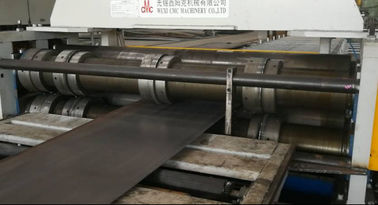
- Coil Processing & Taper Cutting: Establish a dedicated Cut-To-Length line or steel coil slitting setup paired with a CNC taper cutting machine to prepare exact isosceles trapezoid blanks without material distortion.
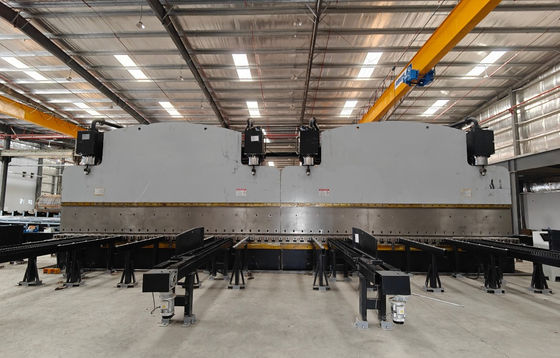
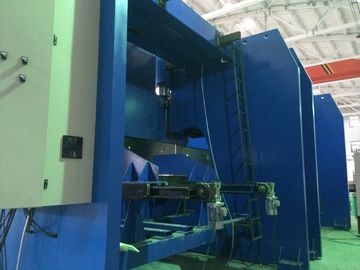
- Tandem CNC Bending: Deploy double linkage or CNC tandem hydraulic press brakes capable of synchronized multi-axis bending for 12m to 14m tapered octagonal or round poles.
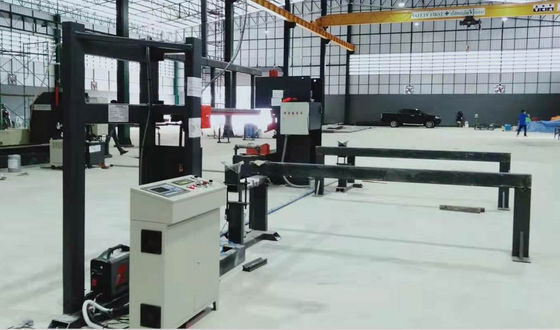
- Longitudinal Seam Closing & Welding: Implement automatic pole shut-welding machines utilizing Submerged Arc Welding (SAW) or Pulse MIG processes to ensure full penetration straight seam welds.
- Hydraulic Straightening & Reshaping: Utilize heavy-force hydraulic pole straightening machines equipped with wireless remote controls to correct thermal distortion post-welding.
- Door Frame Cutting: Integrate CNC laser or plasma light pole door cutting machines for precise 360-degree service door cutout and friction drilling operations.
- Flange Base Plate Welding: Utilize robotic base plate welding workstations or welding rotators to ensure robust structural joint integrity at the pole root.
Actionable Decision Checklist for Plant Engineering Managers
Before finalizing line equipment investments or plant layout schematics, evaluate your project against this practical implementation framework:
- Crane Capacity Matching: Verify that overhead crane tracks accommodate dual hoists (e.g., 16 t / 10 t or 10 t / 6 t) to enable dual-point lifting of long 14m steel poles.
- Safety Zone Marking: Ensure floor markings and clear overhead clearance protocols ("No Standing Under Overhead Crane Loads") are enforced around heavy machinery.
- Tandem Synchronization: Confirm CNC controllers on bending machinery support real-time hydraulic proportional valve synchronization along long beds.
- WIP Buffer Space: Allocate sufficient floor area between seam welding and straightening stations to prevent material handling bottlenecks.
Conclusion & Next Steps in Plant Optimization
Building a competitive, high-yield steel light pole manufacturing facility requires a holistic engineering approach that aligns workshop infrastructure, crane lifting capacities, and machinery integration. By prioritizing material handling workflows alongside advanced tandem press brake and automated seam welding equipment, manufacturers can achieve consistent product geometry and high throughput.
For industrial engineering teams evaluating line expansion or modernizing existing lighting pole production facilities, consulting with specialized equipment turnkey manufacturers like Wuxi CMC Machinery Co.,Ltd provides the technical foundation needed to optimize plant design, line layout, and machine selection.